Showing posts with label old book new book. Show all posts

Wednesday, August 24, 2011

Old Book, New Book #37: The Hobbit -> 2001: A Space Odyssey

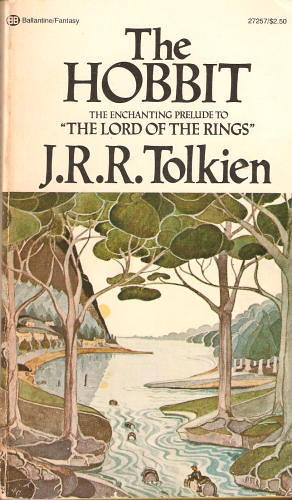
The Hobbit

For as short and easy of a read as The Hobbit was, it felt like it took me quite a long while to finish reading it.  Partly I've just had a busy summer, and partly the fact that I remembered nearly all the details of the story (minus at least one twist that took me by surprise near the end) kept me from being all that excited to keep coming back and reading to see what happens next.  It was interesting how much simpler The Hobbit is than the Lord of the Rings books.  Much easier to read.

And still it was a fun read. I'm excited to see what Hollywood can do with this material, and it'll be interesting to see how they find another movie between The Hobbit and the Lord of the Rings films (the plan is to make 2 more movies).

Up next? 2001 by Arthur C. Clarke. Only 10 years late. :)  I can't remember where, but I read something not too long ago about the fact that Clarke and Stanley Kubrick, director of the iconic film worked together in putting together both the book and the screenplay, and that with a few minor differences they are pretty closely linked. And since my mom always told horror stories of having to sit through the film (something about half an hour of "just colors"), I've managed to avoid seeing the movie, but I figure the book form can't have 30 minutes of colors flying by.  And it's only about 300 pages so if it is just colors it should be a pretty quick read. :)

2001 Space Odyssey

Friday, July 08, 2011

Old book, New Book #36: Harry Potter and the Deathly Hallows -> The Hobbit

DeathlyHallowsCover

The first time I read HP7, it had just come out, and I was in Europe for a conference for school, and I bought it in Germany and read about 100 pages the night I bought it and the rest (another 500 pages or so) on my long flight home to Utah.  Perhaps due to the rapid manner in which I read it, or maybe because I was up for close to 24 hours, I was surprised at how much of the book came as a total surprise to me this time around.  Which made it a very fun read.  I won't say much about the plot, but it was definitely fun to have a nice month of light reading with Harry and his buddies.

Struggled a bit in finding a new book to start.  I mean, I did read a graphic novel (Neil Gaiman's Marvel history project 1602), but I don't know if that really counts.

Finally, I decided it was time to revisit another classic tale of magic and mystery, Tolkien's "The Hobbit".  With the Lord of the Rings movies coming out back around the turn of the century, I've more recently re-read those (though I may have failed to finished the last half of The Return of the King, I can't remember), but it's been years since I read The Hobbit.  I know the first time I read it, or more accurately it was read to me, by my mother (she used to read us books all the time, great mom that she is) and it was an edition we'd borrowed from our neighbors that had lots of still images from the animated film that used to show on the Disney channel, even though I later came to learn it was not a Disney film.  Anyway, with news starting to come out about the upcoming Peter Jackson live-action film version (and a 2nd film that supposedly fills the gap between The Hobbit and the LOTR films, or something like that), it seemed like now might be a good time to pull another classic down from the shelf.  Luckily, I still happened to have a copy on my shelf.

The Hobbit

Tuesday, June 07, 2011

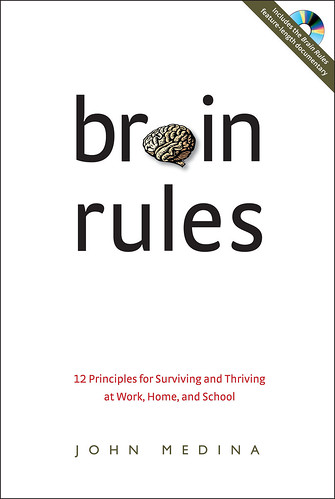
Old Book, New Book #35: Brain Rules -> Harry Potter and the Deathly Hallows

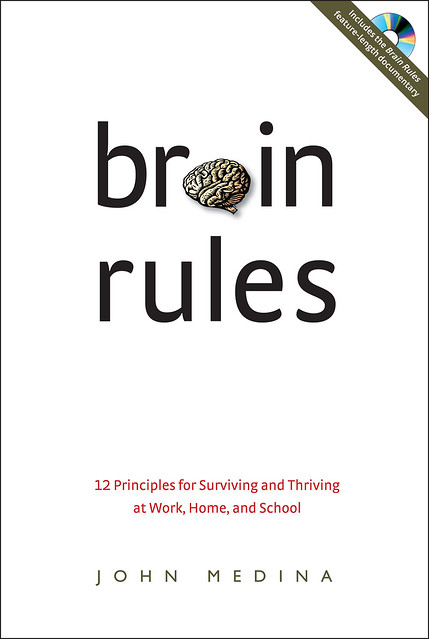
BrainRulesCover

I finished Brain Rules over the weekend.  It was a fairly quick read. Partly because the material wasn't too dense -- very pop science-y, partly because some of it was stuff I was familiar with already, some of it (ok, maybe in large part) because I took this book with me to Orlando and got plenty of good reading time in on the planes.  But it was well-written and easy to follow.  A quick summary: the author looks at researcher in 12 different areas of brain science to come up with some suggestions for how we can improve education, business, and learning in general.  As I said some of it was stuff I'd read before, particularly the part about a lot of our learning happening when we sleep, and how not getting enough sleep can seriously start to impair your brain function.  But there were also some good and interesting points about holding people's attention and interest when presenting information that I thought were particularly interesting and useful.  And a bunch of other stuff too.  Anyway, it's interesting to see both how much know, and how much we still DON'T know about how the brain works.

Given that my life has been kind of crazy lately, I haven't really gotten a good start on my next book yet, but I've decided that now would be a good time to re-read the last Harry Potter book: Harry Potter and the Deathly Hallows. It came out when I was in Europe a few summers ago, and I purchased a copy there (hence the British cover art below) and read pretty much the whole thing on the long flight home (minus 100 pages or so that I read the night before we flew home).  I think reading so much so fast, while in the process of being up for nearly 24 hours straight, resulted in my not remembering much of anything that happens in it. When I saw the Part 1 movie that came out last year, I was genuinely surprised by much of the plot. 

Anyway, seems like it might make for some nice summer reading, if I ever end up with some downtime between all the family stuff, weddings, missions, and other summer partying that's currently going on. And I've got until July 15th if I want to finish it before the 2nd movie comes out. So that seems doable, right? :)

DeathlyHallowsCover

Wednesday, May 18, 2011

Old Book, New Book #34: Bearers of the Black Staff -> Brain Rules

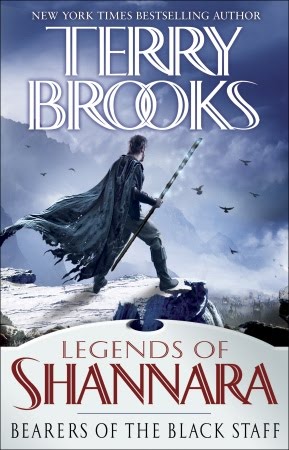
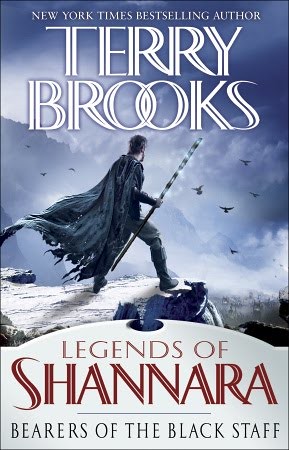
Bearers of the Black Staff

For a Terry Brooks book that was only 350 pages long, this one felt like it took me a long time to finish. Especially when I look back at the limited amount of plot that actually took place in those pages. Or maybe that explains why it took me so long to finish it.  Definitely not my favorite. Maybe my least favorite Shannara book.  Granted, I'll probably still read the sequel when it comes out, but I'm definitely not running out to purchase my own copy of this one.  Just felt like maybe Brooks isn't trying as hard as he used to.  It seemed like there was a lot of philosophizing and whining in this book, and not nearly enough plot.  Anyway...

Up next... well I have a stack of books on my bedside bookshelf, but I'm leaning toward a stroll into nonfiction with something called "Brain Rules" that was recommended by a friend last time I asked for suggestions on Facebook.  Not much of an idea of what it's about, other than some understanding of how the brain works and tips on how to leverage that for personal gain.

BrainRulesCover

Wednesday, April 13, 2011

Old Book, New Book #33: The Book Thief -> Bearers of the Black Staff

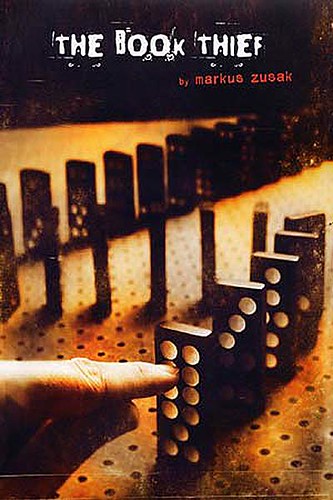
The Book Thief

Finished "The Book Thief" this past weekend. And yes, it was, as I had been informed, a bit emotional at the end. But because of the way that author chose to structure the book, there really weren't any surprises. So that was...interesting, to have the end of the book given away relatively early on. And I always take a little bit of issue with fictional accounts that seem to go for the big emotional payoff in a manipulative way. I mean, it's fiction, right? So the author can make the story however they want. I have a hard time just taking some stories as given when I know that it was a story invented by someone and they had control over whether or not its intentionally sad. Anyway...probably something going on with me more than anything. Anyway, I'll say that I did enjoy the book and thought it gave a little different perspective on the Holocaust than what is usually given. The perspective of the common (or perhaps poorer than common) German.


Up next? Well, let's just say that I was pleasantly surprised to find out that my old pal Terry Brooks is continuing to crank out Shannara stories, and the latest one just happened to arrive at my local library last night (as a result of my requesting it). How long will I keep reading these books? Probably as long as he keeps writing them. Me and TB go way back. Like 3rd or 4th grade. My 3rd grade, not his. :)
Bearers of the Black Staff

Wednesday, April 06, 2011

Old Book, New Book #32: The Devil in the White City -> The Book Thief

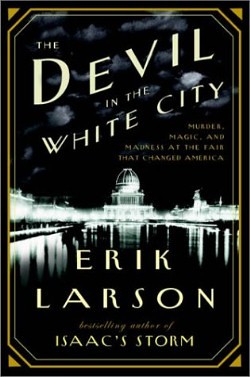
Devil-in-the-White-City

While I was in Hawaii, I finished off "The Devil in the White City". It turned out to be a pretty interesting account of both the Chicago World Expo and of the serial killer who was living near the fair and his eventual capture.  It made me sad to find out that most of the amazing architecture built specifically for the fair burned not long after. Definitely seemed like a beautiful place.  And the birthplace of the ferris wheel. Who knew? Anyone, I liked this book and would recommend it to others.

Assuming that I would probably finish "The Devil in the White City" while I was in Hawaii, I wisely through another book in my bag, "The Book Thief". I honestly knew nothing about this book going in, just that it was recommended to me by several friends. The description on the back made it clear that this was a "Holocaust" book, or at least a book that took place in Germany during that era.  I've read a few of these in my time ("The Hiding Place", "The Devil's Arithmetic", "Number the Stars") and I wondered if this would be similar to those or not. I'll save the answer to that for when I've finished. Stay tuned! 

The Book Thief

Friday, February 25, 2011

Old Book, New Book #31: The Accidental Billionaires -> The Devil in the White City

accidental_billionaires

I took this book with me on my President's Day weekend road trip to La Verkin, and as the weather was pretty wet and cold I had plenty of down time for reading, and I actually had this one finished off by the end of Saturday, leaving me without much to read on Sunday afternoon.  Oh well... at least it was a good read. :)  If you've seen the film "The Social Network", this is the book that that film was adapted from, and the subject matter is pretty much the same.  There are a few additional story elements added in the film for the purpose of story-telling, and a little more jumping around the timeline than in the book, but having seen the film first, the book didn't really add anything too crucial. Which I guess means the film was a pretty decent adaptation.  Anyway, it was a nice quick vacation read, so if you're looking for something like that, you might like this.

Up next is "The Devil in the White City", recently recommended to me by a good friend who happened to own a copy, and long ago mentioned to me by my old roommate CJ, who at the time was showing me around the Midway in Chicago, where a significant portion of this book is set. I don't know much about it, other than it is a work of historical fiction (I guess you could argue the same about "The Accidental Billionaires") about the World's Fair in Chicago in 1893 and a serial killer who was there at the time. I think it's got potential to be pretty good.

Devil-in-the-White-City

Tuesday, February 22, 2011

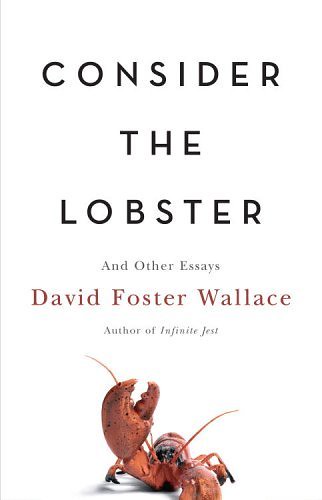
Old Book, New Book #30: Consider the Lobster -> The Accidental Billionaires

consider-the-lobster1

So, as I was preparing for my road trip last week (for those who can't wait for a recap here, photos can be found here), I realized I only had about 20 pages left in my current book, and that I would probably need to get a new book to take with my on the trip if I wanted some reading for downtimes. And I didn't really want to have to pack two books just for the last 20 pages of the first one. So I buckled down and finished off David Foster Wallace's "Consider the Lobster" in the last hour or so before my ride came to pick me up.

I know I've been reading this book for a while now, since December, I believe.  As a collection of essays it definitely didn't provide the same impetus to get to the end that a good novel generally does, so that probably made it easier to put down and just work on it from time to time when I needed something to fill up a little bit of time.

There's definitely a broad variety of topics addressed in this collection, and I have to say it started out pretty rough.  The first essay is about the Oscars of Adult Video (aka porn), and after a couple pages of that, I decided I'd rather just skip it. The next essay or two were critiques of literature that I haven't read written by authors that I am not familiar with (James Joyce among others).  Finally I hit the essay that made me think I ought to stick with this book to the end.  And to be honest, the topic was pretty esoteric as well. It was a review of an English language usage guide. Which, I've never heard of a usage guide before, but it seems to be the equivalent of a dictionary, but for grammar.  DFW spends a fair amount of time talking about why this particular usage guide is particularly well-written, but the part that really grabbed my attention was the topic of "smart" kids who are able to speak like adults, but fail to communicate effectively with their peers (other kids) and that really they are lacking a certain kind of intelligence in not being able choose their communication to fit their audience.  Or something like that. This was a couple months ago.

I also particularly enjoyed essays about John McCain's 2000 campaign, one about the author's experience with September 11th in an Indiana suburb, and one about star athletes and their inability to produce memoirs that consist of much more than cliches.  There was also an essay about Dostoevsky, or more particularly one man's compendium of analysis of Dostoevsky that got me thinking maybe I should take a crack at Crime and Punishment or the Brothers Karamazov at some point in the near future.

Anyway, minus the first essay that I skipped, I thought this was a thought-provoking collection of essays and I think I would consider reading more of Wallace's work, though I probably won't start with Infinite Jest first, given its 1079 pages.

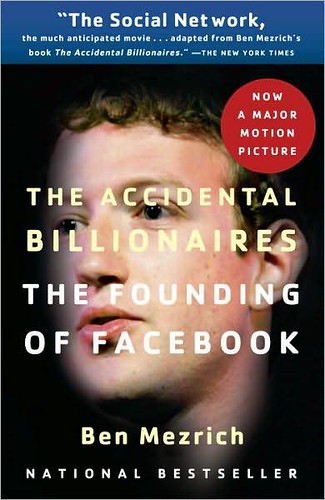
The book I grabbed just hours before that at the tiny library branch near my work was "The Accidental Billionaires", a book about the creation of Facebook by Ben Mezrich (author of "Bringing Down the House").  If you've seen "The Social Network", it's the book that that film was adapted from.
accidental_billionaires

Monday, December 13, 2010

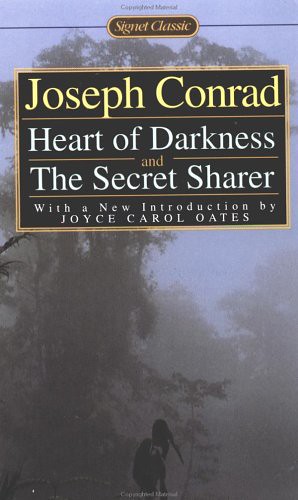
Old Book, New Book #29: Heart of Darkness & The Secret Sharer -> Consider the Lobster

Heart of Darkness and The Secret Sharer

Despite the combined length of Heart of Darkness & The Secret Sharer being a mere 165 pages, it definitely took me a considerable amount of time to finish this one off. In part because the reading was pretty dense, and in part because neither of the stories kept me coming back to read. I feel like I finished this one more out of a commitment to finishing than to anything else. I guess I might need to read the Introduction now that I'm done (I hate reading introductions to classics that give away too much of what the stories are about, so I usually skip them), to see if I can get some more insight into why they (Heart of Darkness especially) are noteworthy. I found The Secret Sharer to be rather odd and incomprehensible, and Heart of Darkness to be unnecessarily confusing. At times the plot jumped forward with no explanation of what had happened or how to move us on to the next point. Maybe the film version is less confusing and more interesting. Anyway, I don't claim to be a literature expert, so there are probably other people who will find my reviews uneducated or uncultured. Sometimes I just enjoy a good story, and these did not fit the bill for me.

Next up: A collection of essays titled "Consider the Lobster" by the recently deceased David Foster Wallace, who I'd never heard of until his death, which spawned a variety of comments in the web arenas I frequent (notably kottke.org). I've been wondering what all the fuss was about, but I figured rather than jump in with both feet and tackle "Infinite Jest", the 1000+ page novel that I see mentioned frequently, I'd start with some of his essays.

consider-the-lobster1

Tuesday, December 07, 2010

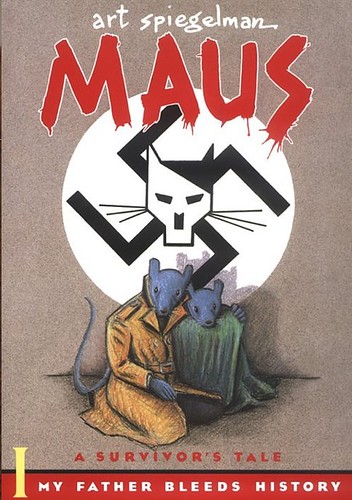
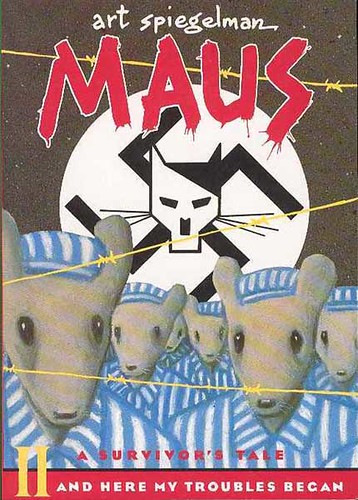
Old Book, New Book #28: Maus I & II -> Heart of Darkness & The Secret Sharer

Maus-I

Maus II

Now, as I mentioned before, I generally don't take time to note the graphic novels that I read here on the blog, but in this case, I thought these books merited a note. Because these aren't just graphic novels, they are Pulitzer Prize winning graphic novels. Basically the author/artist shares his father's story as a Holocaust survivor, along the way also portraying his own experience of dealing with his father and the after effects of his father's experiences during the Holocaust. In high school, and some in junior high, I got a good helping of Holocaust literature ("The Hiding Place", "Number the Stars", "The Devil's Arithmetic") but it's been a while since I've revisited the topic. Definitely a dark time in the history of our world, and we're lucky to have the memories of its survivors preserved in a variety of forms. Anyway, I won't say too much about these, other than to say that it was definitely worth the read, and didn't take too much time to get through both volumes.

Lately, I feel like I've been reading whatever I happened to find at the small library near my work, and the next book on the list is one of those. "Heart of Darkness & The Secret Sharer" is a publication that contains both of those novellas (short stories?) by Joseph Conrad. I'd heard of Heart of Darkness, but never Secret Sharer. I knew that the former was a "classic" and provided the outline of the film "Apocalypse Now", but that was about it going in. Between the two, the book is only about 160 pages, so hopefully not too long of a read.

Heart of Darkness and The Secret Sharer

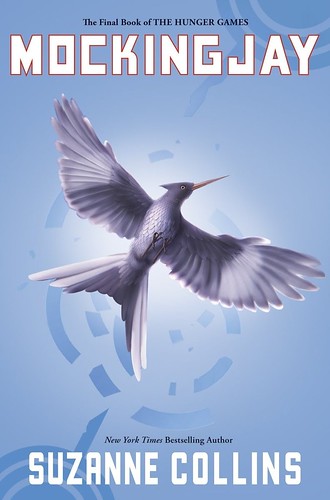
Old Book, New Book #27: Mockingjay -> Maus I & II

Mockingjay

I can't believe it's taken me so long to blog about the stuff I've been reading lately. Not sure what happened to me. Anyway, I did quickly finish off Mockingjay, and have to say that it was probably my least favorite of the 3 books, though still very readable. Since it's been a couple months now since I finished reading it, I don't really have much detail to add to that thought. I just didn't really find the outcome to be very satisfying. I guess if the message of the books was that war sucks and even when its over, things can be damaged pretty much irreparably then I got that message. :) I thought it was kind of a depressing book.

So, of course, what was my next choice of reading material? A pair of graphic novels about the holocaust. :) Maus, volumes I & II. Now, I do from time to time read graphic novels (I'd call them comic books, but they're usually a collection of comic books), and generally don't feel like they merit mention in this space, but given the subject matter of the Maus books, I felt like they deserved their own spot on the list.

Maus-I

Maus II

Wednesday, October 20, 2010

Old Book, New Book #26: Catching Fire -> Mockingjay

catching-fire

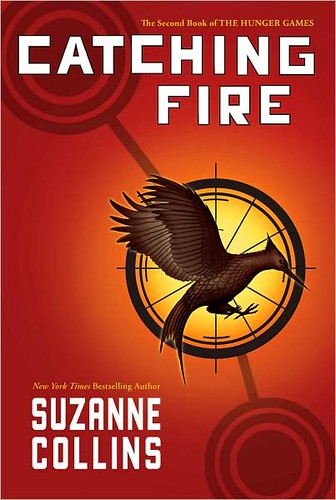
Well, I was correct in thinking that Catching Fire would be a quick read. :) And I actually started reading it a few days ago. Not just yesterday when I posted it to the blog. Anyway, it was an interesting sequel in that it has many of the same elements of the first book, repeated but with some variation. Still held my interest though, and I was interested to see how things turned out.

And now I'm continuing on to the 3rd and final book in the series, "Mockingjay". I've been hearing about these books for a couple years now and kind of thought it would be nice to wait until all 3 of the books were out and available before I started reading them so that I could finish them quickly and not be stuck waiting around. So I guess I'm glad that Natalie waited until they were all out before getting me the first one for my birthday.
Mockingjay

Tuesday, October 19, 2010

Old Book, New Book #25: Mythical Man-Month -> Catching Fire

MythicalManMonth

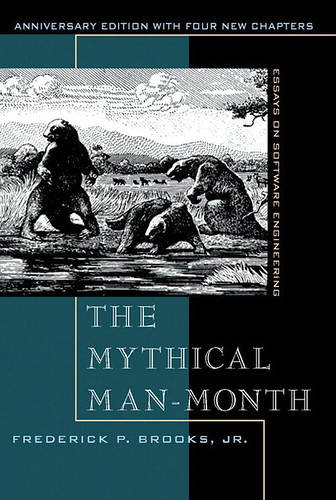
I read most of "The Mythical Man-Month" during my flights to and from Hawaii, and then took my time getting around to finishing it after I got home from the trip. Despite most of the book being written in 1975 (this was the 20th anniversary edition that also included essays from 1986 and 1995), it definitely had some insightful principles for managing large software development projects.

The book's namesake premise is that the idea that the amount of work to be done in a software project can be measured simply in "Man-Months", i.e. the amount of work that one man does in a month. And that a project that can be done by 5 men (or women) in 10 months (50 Man-Months) could be done equally by 10 men (or...who are we kidding, like you could find 10 woman software developers) in 5 months. Not so! says the author. Adding more people to a software project requires extra work to split the work up between developers, and more work to keep more people in communication regarding the project. This problem is exacerbated when trying to add more people to a project that has fallen behind schedule. The author states a theory that "Adding more people to a late project makes it even later."

This might be the first book I've ever read on the topic of software engineering that wasn't a textbook I was reading for a class (and actually this book was actually recommended as supplemental reading for a class I took). I found a couple of the author's thoughts on what makes a programmer a programmer to be interesting. Early on he says one of the challenges of software development is the requirement of perfection. Compilers don't intuit things. Corner cases have to be addressed. In computer programming, the devil truly is in the details and a successful program has to be built all the way in order to be robust and reliable. So programmers tend to be people who are perfectionists and who can deal with that requirement for perfection and completeness.

In a later section, he speaks of asking programmers "Where is next November?" and goes on to say that most programmers are very spatial thinkers and they generally have spatial interpretations of time. That certainly struck a chord with me, given my own mental maps of numbers of calendars.

Anyway, it was an interesting read and gave me some things to think about in my own work in the large-scale complex software development environment there.

Having finished off a book of nerdy essays, I've moved back to lighter fare, borrowing "Catching Fire", the 2nd book in the Hunger Games series from a friend. I enjoyed the first one and it was a quick read, so I'm hoping for more of the same in the 2nd installment.

catching-fire

Thursday, October 14, 2010

Old Book, New Book #24: The Hunger Games -> The Mythical Man-Month

Hunger Games

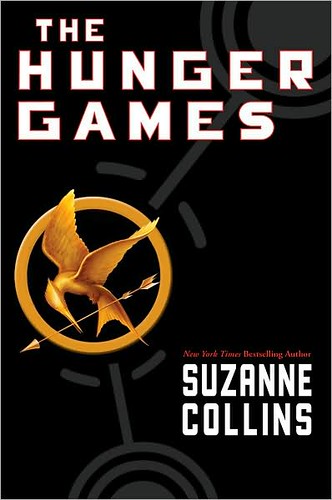
The Hunger Games was another quick read that I ALMOST finished before I left for Hawaii. But I was quite finished in time to not take it on the trip. I just had to make sure I packed another couple books in case I needed them. I ended up finishing the Hunger Games on board the first leg of our flight, while we were waiting for everyone to finish boarding.

I thought it was a pretty cool book with kind of a post-apocalyptic dystopian kind of setting with some sci-fi aspects. Definitely a little bit on the darker side. I can see why it's been such a popular series, though. At least based on the first book.

Haven't managed to track down a copy of the 2nd book, "Catching Fire" yet, though, so for now I've moved on to something completely different: "The Mythical Man-Month", a collection of essays on Software Engineering, and more specifically the managing of large software engineering projects. I nearly finished this book as well on the Hawaii trip and have about 20 pages left to go, but have been kind of busy since I got back. Anyway, I'll save my comments about the book for the post-reading post. For now, here's the cover:

MythicalManMonth

Monday, September 27, 2010

Old Book, New Book #23: The Lost Symbol -> The Hunger Games

the_lost_symbol

As expected, "The Lost Symbol" turned out to be a pretty quick read. In fact for most of last week I had a hard time putting it down. Definitely a page-turner. I enjoyed learning about some of the Masonic connections to the monuments in Washington, D.C. and the plot of the book was pretty intriguing for a while. In the end, I didn't love this one as much as "Angels and Demons" or "The Da Vinci Code", but it was still a fun read. The wrap-up following the conclusion was a bit long-winded (preachy?) but that felt like a minor complaint.

I'm following that one up with what, by all accounts, should be another quick read, "The Hunger Games". My sister, Natalie, gave it to me as a gift for my recent birthday and I got started on it over the weekend. I'm glad to know that the 2 sequels are out and available should I find myself hooked after this first one. Guess we'll see how it goes. I leave for a week in Hawaii on Saturday and may need a couple of books to keep me busy for vacation reading. Got at least one that should be showing up the library before I leave.

Hunger Games

Tuesday, September 21, 2010

Old Book, New Book #22: Lost City of Z -> The Lost Symbol

Lost City of Z

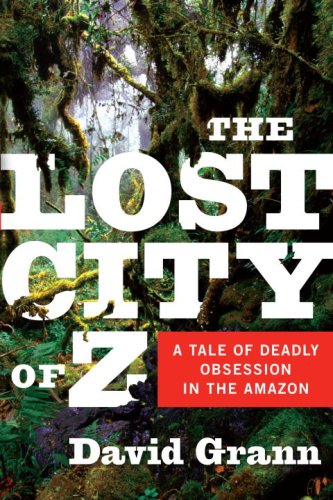
Finished Lost City of Z on Labor Day weekend. Since then I've been looking for something I really want to read and checking out the first 3 volumes of graphic novels based on Stephen King's Dark Tower series, a series that I enjoyed quite a bit. And no, I don't count graphic novels as "books" for the purpose of these blog posts. :) Lost City of Z was a pretty good read, and definitely interesting to think about the fact that there are still parts of the world that aren't very well explored even in these modern times. Definitely made me glad that I didn't serve my mission in the northern part of South America (bugs!). In the end, I thought the book was only okay. Thought the author's journey to the Amazon might be a little more interesting than it turned out to be, and in the end was left with a lot of things to wonder about with regards to ancient civilizations in the Amazon basin. I mean, obviously if the author had answers to those things he would have provided them. Just felt like the book was kind of incomplete with only a tiny nod toward these topics at the very end. Anyway, it was interesting enough, but not fantastic. In my opinion.

Jumping back into some lighter fiction now. I just borrowed last year's Dan Brown novel, "The Lost Symbol" from my roommate and read the first 50 pages last night. Looks to be a quick read and I think it'll be fun to learn some more about the symbols in Washington, D.C., always one of my favorite places to visit. Obviously, I feel like you always have to take his stuff with a grain of salt, but he can definitely spin a good yarn. And I didn't realize the titles of these two books were so similar until just now. Apparently there are a lot of lost things out there.

the_lost_symbol

Monday, July 26, 2010

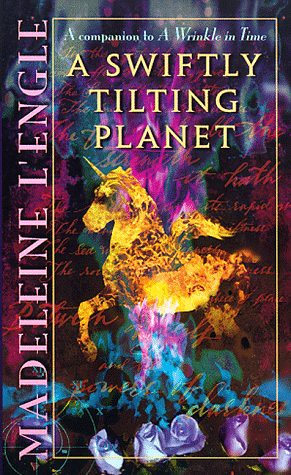
Old Book, New Book #21: A Swiftly Tilting Planet -> The Lost City of Z

Swiftly Tilting Planet

A Swiftly Tilting Planet was the main reason I started reading Madeline L'Engle's Wrinkle in Time series again. I always remembered thinking it was cool when I'd read it as a kid but that maybe I didn't quite understand it all. But I didn't want to just read that one again without re-reading the others in the series leading it up to it, for fear that I'd miss some of the details. Anyway, turns out that I do still like A Swiftly Tilting Planet better than A Wrinkle in Time or A Wind in the Door. I enjoyed the time travel theme and the interwoven storylines of two families linked throughout that timeline. It was also interesting to discover (since I didn't really remember this detail from before) that the dictator in the book (Mad Dog Branzillo) hails from a fictional republic in Patagonia (Vespugia) where I served my mission and that some of the story deals with the idea of Welsh settlers going to Patagonia, which is something that actually happened. There's a town named Gaiman in the province Chubut that was founded by Welsh settlers and has a famous tea house where princess Di visited at least once. I never actually went to Gaiman, but there is a branch of the church there. Anyway, I found that detail interesting.

I finished A Swiftly Tilting Planet about a week ago, and since then when I've had time to read, I've had to settle for a couple issues of ESPN the Magazine that I had laying around and hadn't gotten around to digging through. (About a year ago, I got a 2 year subscription for $7). Mainly because I wasn't sure what I wanted to read next. I know there are two more Wrinkle in Time books, once of which I've read before (Many Waters). But I guess I thought it might be a nice time for a change. Finally, I decided to read a book that I'd bought my dad for Father's Day a year or two ago: "The Lost City of Z". I know it's a little strange that I would buy him a book that I personally have not read, but I'd heard good things about it, and it seemed like one he would like. He did like and has since recommended it to me, so when my family came into town on Friday for the holiday, I asked him to bring it. It's a true story about explorers searching in the Amazon in the 20th century for a lost civilization. And also, apparently, the author got caught up in the search as well, so it includes the stories of explorers from the early part of the century as well as the author himself searching the Amazon for this lost city.

Lost City of Z

Tuesday, June 22, 2010

Old Book, New Book #20: A Wind in the Door -> A Swiftly Tilting Planet

a-wind-in-the-door

As expected, A Wind in the Door was a pretty quick read and I knocked it out in about a week. (I just haven't gotten around to blogging it until now.) To be honest, I don't entirely know if I liked it that much or not. It has some interesting ideas about space and size, but there are a lot of things that are left vague or unexplained. Like what the title of the book has to do with anything for example. I guess the take home message from the book was that even very small things are connected to very large things and can have a huge impact.

Finally, though, I've arrived at the real reason I started re-reading these books again in the first place: A Swiftly Tilting Planet, which I also remembered very little about, other than that it had some time traveling and the protagonist stepping into people's lives a la Quantum Leap, really. And that I thought it was a pretty cool book when I read it all those years ago. I guess we'll see if it lives up to my memories of it.

Swiftly Tilting Planet

Tuesday, June 08, 2010

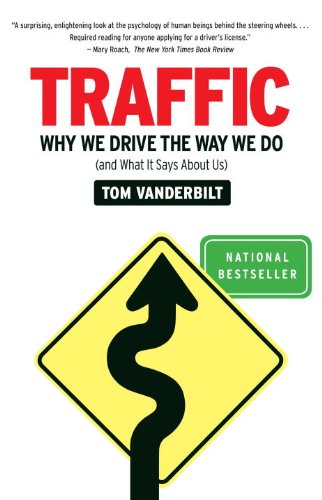
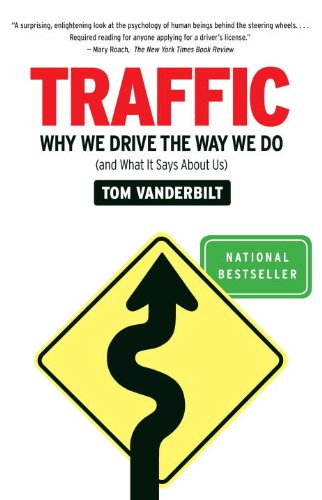
Old Book, New Book #19: Traffic -> A Wind in the Door

traffic-book-cover

Well...it's done. I finally finished reading "Traffic: Why We Drive the Way We Do (and What It Says About Us)". It took me over two months (and granted I've had other things occupying more of my time lately), in great part, because it just wasn't THAT interesting of a read. Yes, some of the ideas were interesting. In fact the opening section on whether or not to merge early or late was really quite interesting. Sadly, the rest of the book failed to live up to the introduction. I started reading it in the hopes of finding some secrets about how to improve my commute, and ended up learning over and over again that making roads safer often makes them more dangerous.

And that gets to my biggest issue with the book. It was just so overwritten. I felt like this book would have been better as a series of articles, or at the very least with more judicious editing. It felt like the author would present an idea, and then present every possible relevant study or factoid or possible cultural belief that could be related to support that idea. I appreciated learning more about traffic safety and the way that roads that are inherently safer often lead to more reckless driving and a subsequently lower reduction in accidents and fatalities than expected. I appreciated the discussion of ideas like congestion pricing, and why roundabouts really are safer than traditional intersections. I just didn't appreciate them 300 pages worth.

In any case, I'm kind of looking forward to some lighter fare, with a return to the Wrinkle in Time series. Next up is "A Wind in the Door", which I've of course read before, but so long ago that I really don't recall anything. From looking at the back of the book, I know/remember that there's something to do with microscopic organisms (bacteria?). In any case, I hope that this next book won't take me another two and a half months to read.

a-wind-in-the-door

Wednesday, March 31, 2010

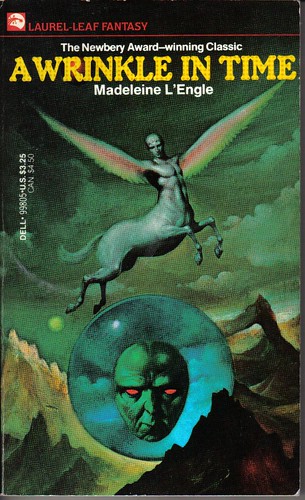
Old Book, New Book #18: A Wrinkle in Time -> Traffic

a-wrinkle-in-time

Well, that went quickly, didn't it? I managed to finish this book in just over a week, so it must have at least been entertaining, right? :) And it was. I remembered this book only vaguely from reading in my younger years, so it was still full of surprises. And still a little weird. But enjoyable. I just felt like a lot of what happened was unexplained. I'm sure that some Children's Literature grad student has broken it all down in a thesis somewhere, but I'm not sure that there really are satisfactory explanations for some of what happened. What's important is that things turned out alright in the end. :)

As I took this one back to the library, I went straight to the shelf where I've seen the sequel "A Wind in the Door" each of the last few times I've been there. And wouldn't you know it? It was gone. So I'm going to have to put a hold request on that one and move on to the other book that I have checked out: "Traffic: Why We Drive the Way We Do (and What Its Says About Us". It was recommended by my friend CJ and looks to be an interesting pop-psychology-esque look at driving. Stay tuned and I'll tell you what I think about it.

traffic-book-cover