Showing posts with label Newbery Foray. Show all posts

Tuesday, May 29, 2012

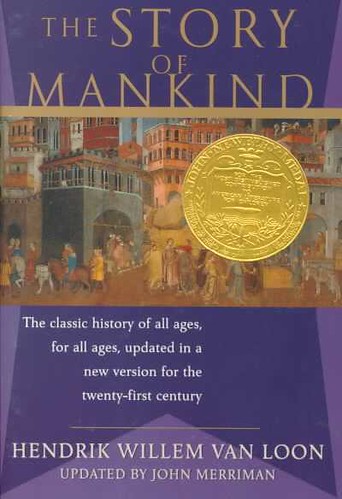
Newbery Foray #5: The Story of Mankind

The Story of Mankind

I recently "finished" reading "The Story of Mankind" by Hendrik Willem van Loon, the very first book to win the Newbery Medal.  And I have to be honest, if more of the books are like that one its amazing the award has lasted this long.  I mean, it's a book written for children, but I don't know if the children would appreciate it. :)  Basically the author decided to write a book giving all of known history, for his children or grandchildren, maybe.  And it doesn't exactly end up being a history of all the world, mostly just the Middle East and Europe with a little bit of America thrown in.  But yeah, it was long, and for the most part slow moving, as history tends to be.  And I say "finished" because since the book won the Newbery Medal back in 1922, the author and then his son and now another guy have kept adding history to the book to keep up with...you know...history. Except that all of recorded history up to the 1920s took 500 pages, and then the last hundred years took another 150 pages. Since my main objective was to read Newbery Medal winners, and all that was added after the book won the award, and I'd already been slogging my way through it for 3+ months, I didn't feel too obligated to finish the additional chapters.

In any case, this was by far my least favorite of any Newbery Medal winner I've ever read. I would NOT recommend that you read it unless you have some kind of weird goal to read all the Newbery Medal winners.  I guess I should say that I did learn some new stuff about pre-20th century European history, seeing as how that's something that I've never known or learned much about.

Wednesday, March 31, 2010

Old Book, New Book #18: A Wrinkle in Time -> Traffic

a-wrinkle-in-time

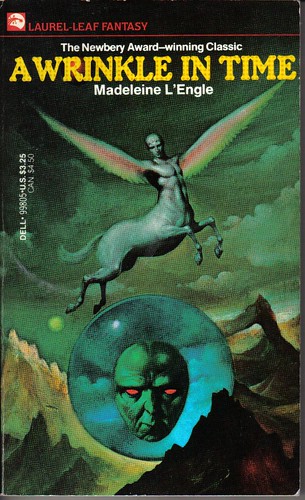
Well, that went quickly, didn't it? I managed to finish this book in just over a week, so it must have at least been entertaining, right? :) And it was. I remembered this book only vaguely from reading in my younger years, so it was still full of surprises. And still a little weird. But enjoyable. I just felt like a lot of what happened was unexplained. I'm sure that some Children's Literature grad student has broken it all down in a thesis somewhere, but I'm not sure that there really are satisfactory explanations for some of what happened. What's important is that things turned out alright in the end. :)

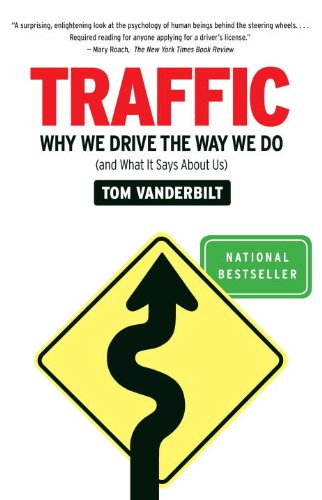
As I took this one back to the library, I went straight to the shelf where I've seen the sequel "A Wind in the Door" each of the last few times I've been there. And wouldn't you know it? It was gone. So I'm going to have to put a hold request on that one and move on to the other book that I have checked out: "Traffic: Why We Drive the Way We Do (and What Its Says About Us". It was recommended by my friend CJ and looks to be an interesting pop-psychology-esque look at driving. Stay tuned and I'll tell you what I think about it.

traffic-book-cover

Wednesday, January 27, 2010

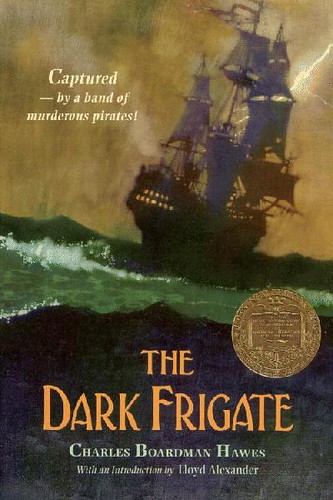
Newbery Foray #3: The Dark Frigate

The Dark Frigate

As I work through this vast list of Newbery Medal winners, my method of choosing which to read next has been to simply look at the list and choose the oldest one I haven't read yet that is available at the library I happen to be in, the exception of course being the first one I read, "Dear Mr. Henshaw". The one I just finished, "The Dark Frigate", won the Newbery Medal in 1924, which really isn't that far off from being 100 years ago. I suspect that may explain some of the strange words used in it. Or maybe that's just a product of the book being set in 17th century England. Not sure.

In brief synopsis this is the story of an orphaned boy who ends up on a ship that is then captured by pirates and he has a brief adventure. Strangely though, he doesn't end up on the ship for maybe 80 of the 250 pages. And even then the story moves pretty slowly. I nearly gave this book up many times, but stuck with it out of principle. Thankfully, the plot picked up a bit toward the end, and the last third was fairly enjoyable.

Not sure I'd recommend it, but in the end I didn't hate it. :)

Saturday, November 28, 2009

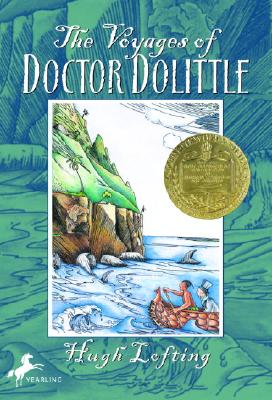
Newbery Foray #2: The Voyages of Dr. Dolittle

Voyages of Dr Dolittle

While I continue to wrestle my way through Atlas Shrugged (under 200 pages to go!), I also managed to sneak in some (much) lighter reading by finishing another Newbery Medal winner: Hugh Lofting's "The Voyages of Dr. Dolittle", which won the big prize way back in 1922. I finished this a couple weeks ago, but am just getting around to writing it up.

By way of a brief review, I have to say that this was definitely a children's book. Not much in the way of any lengthy story lines, aside from the overarching narrative of Tommy Stubbins meeting up with the good doctor, and after some brief training, taking off on a voyage across the sea. Most of the chapters of this book are a mere handful of pages, and often when a new character is mentioned in the way of "It's been so long since we last saw Chee-Chee", it's only a paragraph or two before that character arrives on the scene.

Compared to "Dear Mr. Henshaw", this one was at a much younger reading level. I was also surprised to find out that it was not the first Dr. Dolittle novel. In any case, it was an okay read.

Monday, September 14, 2009

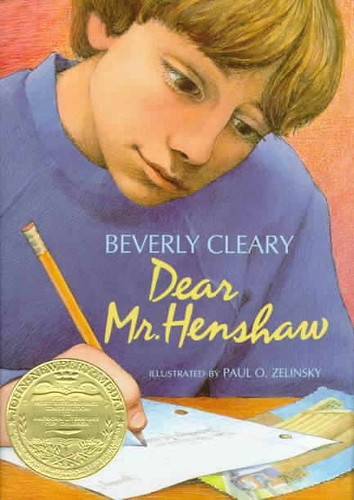
Newbery Foray #1: Dear Mr. Henshaw

Dear Mr Henshaw

I'm just about ready to start blogging about my cruise, but in the meantime, I wanted to let you all know that Atlas Shrugged wasn't going to end up as my favorite book of the year, simply by being the only book I actually read this year. I took a brief respite from long speeches about motive force to quickly go through the first of the Newbery Award winners that I mentioned I was going to try to read. Dear Mr. Henshaw by Beverly Cleary was the winner in 1984, and while I've read many of her other books (I especially remember reading some of the ones about Ramona), I'm pretty sure I never read this one before.

It's written in the form of letters from an elementary school-aged kid to an author (Mr. Henshaw), and then switches mostly to journal entries partway through. The boy's parents divorce early on in the book and it mostly deals with Leigh's(the boy) trying to cope with that issue, including his mom working a lot, and moving to a new school and not having friends for a while. I liked it, and was touched, and also grateful that my parents have managed to stay together when so many others have not.

1 down, 87 more to go (if my math is correct).

Friday, August 14, 2009

(I'm on a) Newbery Foray

(sung to the tune of Raspberry Beret)

Now that I'm sure you're tired of hearing about my vacation that took place almost a month ago, I guess I could blog about something more contemporary. I've been keeping plenty busy, and will be going camping (again!) tonight. Went boating Saturday last week and Monday night this week (an interesting excursion including pirates!) . Saw Iron Man on the lawn of the capitol Wednesday, and Tuesday night I went to a friend's party and then another friend's soccer match.

Anyhow, last night I made a trip to the library with a friend and, among other things, we stumbled across a shelf of Newbery Medal winners in the children's section, and we started talking about reading all the Newbery Medal winners. Seems doable, right? Though maybe not as easy as reading all the Caldecott Medal winners, am I right? :)

I'm guessing they're all relatively available, and for the most part they should be fairly easy reading, right? Anyway, we grabbed two -- The Voyages of Dr. Doolittle, which was the oldest one we could find, the 2nd ever winner in 1923; and Dear Mr. Henshaw from 1984, because it looked like fairly light reading -- to get started with. Guess we'll see how it goes. Some I've ready before, including this Dr. Doolittle book, others not so much. It appeals to the completist in me.

Oh, and yes, I'm still dragging my way through speech after (truly enjoyable, but not really capturing my imagination) speech in Atlas Shrugged, waiting for the pace to pick up. Given that I'm halfway through the book, somehow I'm guessing Ayn Rand isn't going to switch to "show don't tell" after how far we've already come with the "show AND tell and then tell several more times" method. :) Not giving up. Maybe I just need to set aside more reading time, instead of playing Bioshock when I find a spare moment.